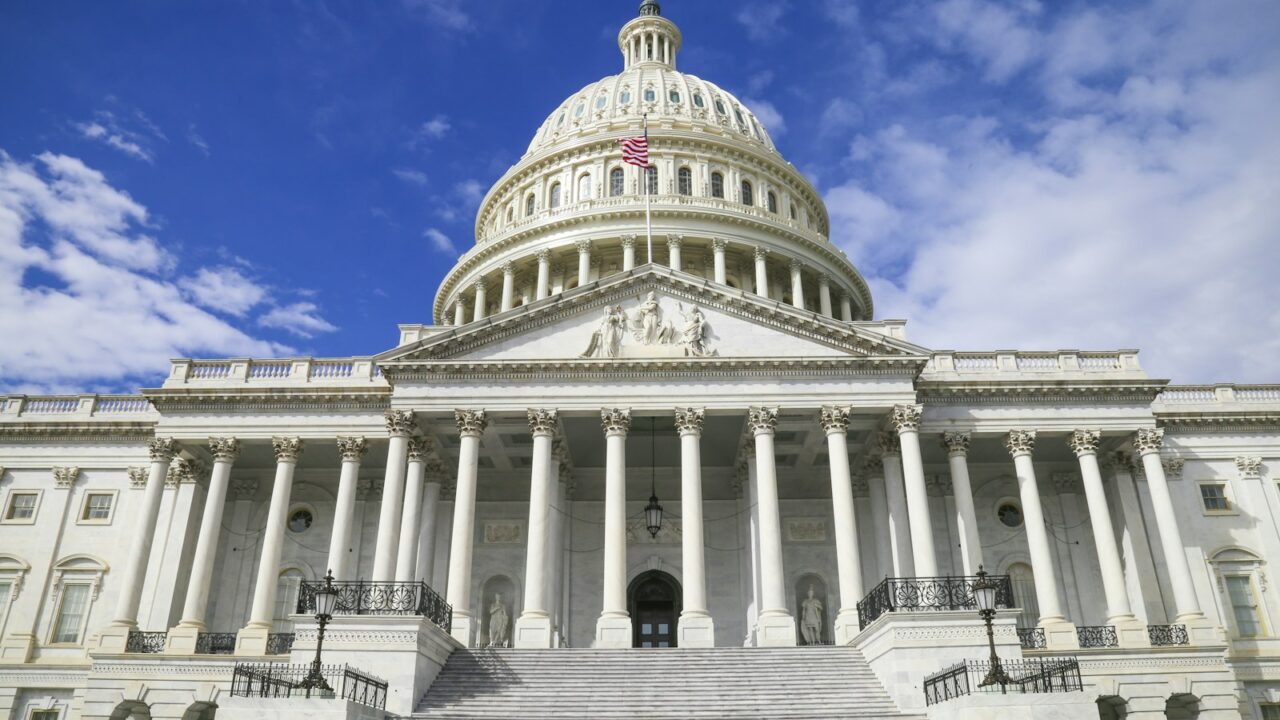
The Democratic Party has secured at least 258 seats in the US House of Representatives, its largest majority since 1992, Sky News Arabia reported, with four districts still undecided. This report explains the numbers and what has been said about their impact.
The key numbers
The Democrats reached that level on Sunday 22 November after their candidate Chuck Hubbard beat Republican Rep. Virginia Foxx in North Carolina. Their net gain so far is 44 seats, four more than in the 2018 midterms, held during Donald Trump’s first term. Republicans have secured at least 173 seats and will form the minority.
What is still undecided?
Four districts are still awaiting a result: one in Minnesota, one in Tennessee, and two in Louisiana that go to a runoff in December. Since the announced totals (258, 173 and four pending districts) cover all 435 House seats, the pending results are unlikely to change the overall picture of the majority but will fix the final margin.
Trump and the markets
President Donald Trump said, as relayed by Sky News Arabia, that he had predicted two things about the 3 November midterms: that stock markets would fall sharply if the Democrats won, which he said had happened, and that Iran would step up its attacks, which he said had also happened. This is the president’s own assessment; the available sources give no data on the size of any market fall or whether it was linked to the election result.
What does the result mean?
The result gives the Democrats more weight to push their priorities in the House but also puts them under pressure to deliver on campaign promises, Sky News Arabia said. The House is one of two chambers of Congress, and legislation still needs Senate approval and the president’s signature, which limits what a House majority alone can pass.
Compared with 2018
On the published figures, the Democrats’ 44-seat gain exceeds their 2018 gain by four, meaning that year’s gain was about 40 seats. And 258 of 435 seats means the party controls about 59 per cent of the House, if the announced results hold. Voting took place on 3 November, while some districts were still being settled nearly three weeks later, which is usual when races are close or runoffs are held.
What next?
Eyes will be on the four undecided districts, especially the Louisiana runoffs in December, and then the first moves of the new majority when the House convenes. The effect on markets and foreign policy will depend on what official data show in the coming weeks.