The risks of climate change to Egypt’s coasts are back at the centre of public debate, with a focus on the low-lying areas of the northern Delta and the North Coast. This report draws on statements by officials and experts relayed by Sky News Arabia, and separates officially announced figures from experts’ estimates, because the two do not mean the same thing.
What has been spent and built
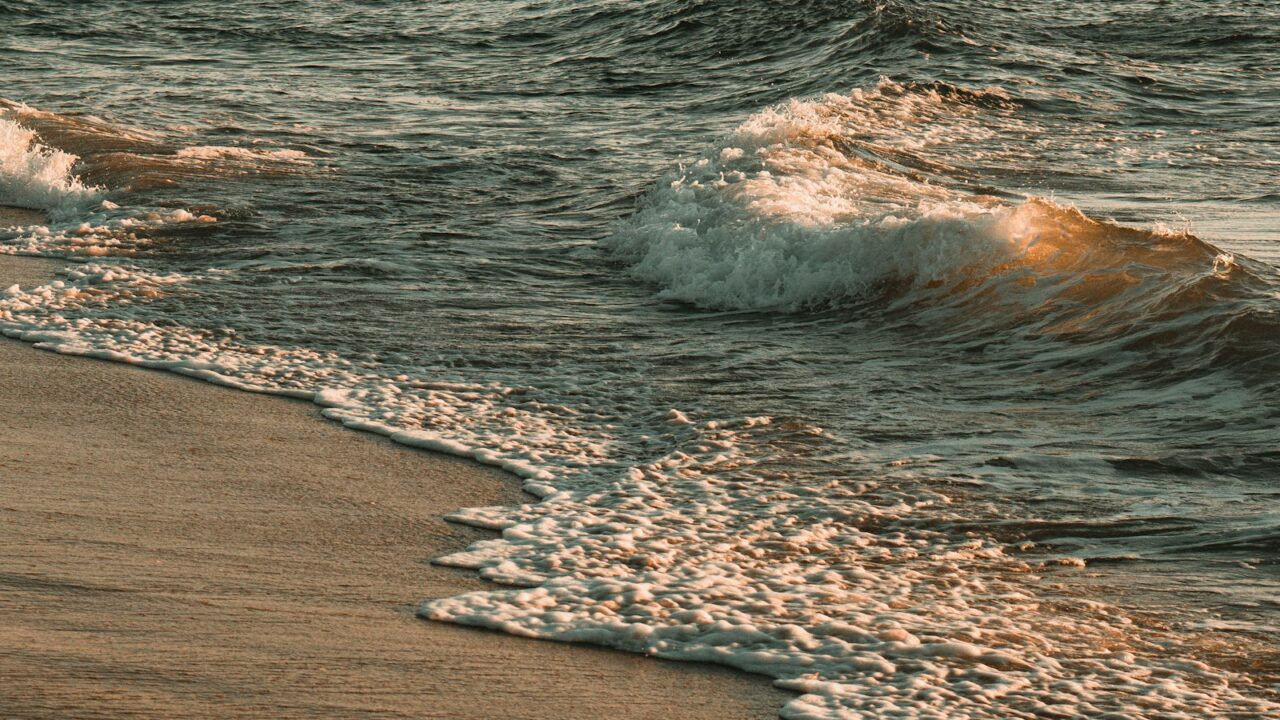
Water Resources and Irrigation Minister Hani Sewilam announced in November 2026 shore-protection projects costing more than EGP 28bn at current prices, including 16 projects in Alexandria costing about EGP 5.6bn and protection works stretching around 73 kilometres using environmentally friendly materials. Egypt’s Mediterranean coast runs for about 1,200 kilometres.
Shore Protection Authority head Mohamed Ghattas said the projects protect 120 kilometres of shoreline from erosion and 73 kilometres of low-lying Delta land from flooding in five coastal governorates: Port Said, Damietta, Dakahlia, Kafr El-Sheikh and Beheira. He said the authority takes account of all climate scenarios, including the most pessimistic, when assessing the projects.
Why is sea level rising faster?
Manar Ghanem of the Egyptian Meteorological Authority’s media centre explained that global average temperatures more than 1.5°C above pre-industrial levels have intensified climate change and ocean heat, and that thermal expansion of water and melting ice are the main drivers of sea-level rise. By her figures the level rose about 4.7 millimetres in 2024, a much higher rate than in earlier periods.
She warned that sea-level rise coinciding with storms, heavy rain and strong winds multiplies the risk of coastal flooding in low-lying areas, and that the phenomenon is not governed by sea level alone.
Alexandria: between warning and reassurance
Abbas Sharaky, professor of geology and water resources at Cairo University, sees the rise as gradual and measured in centimetres, with levels up about 20 centimetres over the past century, and warns that a 50-centimetre rise could flood parts of the Delta coast from the west to Port Said and enlarge the northern lakes such as Manzala, Burullus and Mariout. He cited studies he took part in estimating the area at risk at about half a million feddans, home to nearly two million people, which could double with a one-metre rise.
Sharaky rejected talk of Alexandria’s imminent drowning, explaining that the city sits on a rock ridge about five metres high at Abu Qir that rises westward to 20-30 metres, that the risks are concentrated in low-lying land south of the ridge, and that noticeable effects on the city would not appear, by his estimate, for about 500 years.
Next steps
Ghattas said current projects are sufficient but complementary works will be needed in future, and that the authority has prepared an integrated strategy to protect the remaining shores, especially the Delta’s, relying on environmentally friendly solutions chiefly beach nourishment with sand using giant dredgers; it is now preparing a project to replenish Alexandria’s beaches with sand. The Meteorological Authority said it supplies data, numerical models and interactive maps simulating scenarios of up to 100 years to support the government’s adaptation plans.