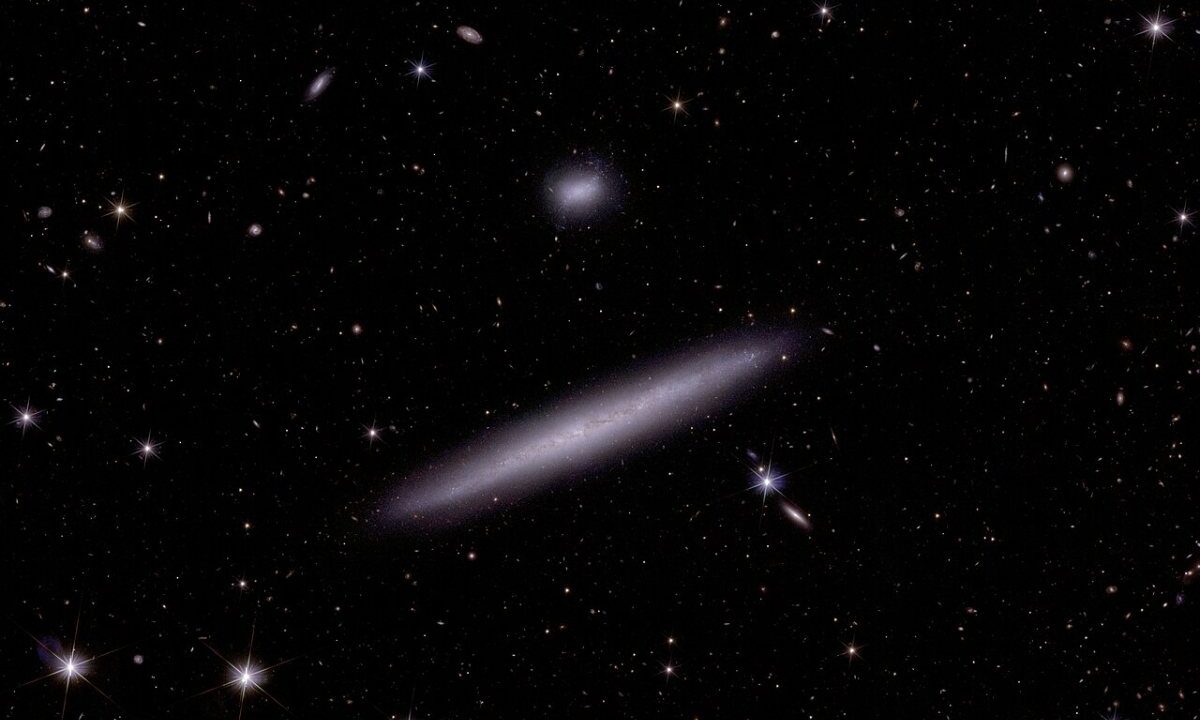
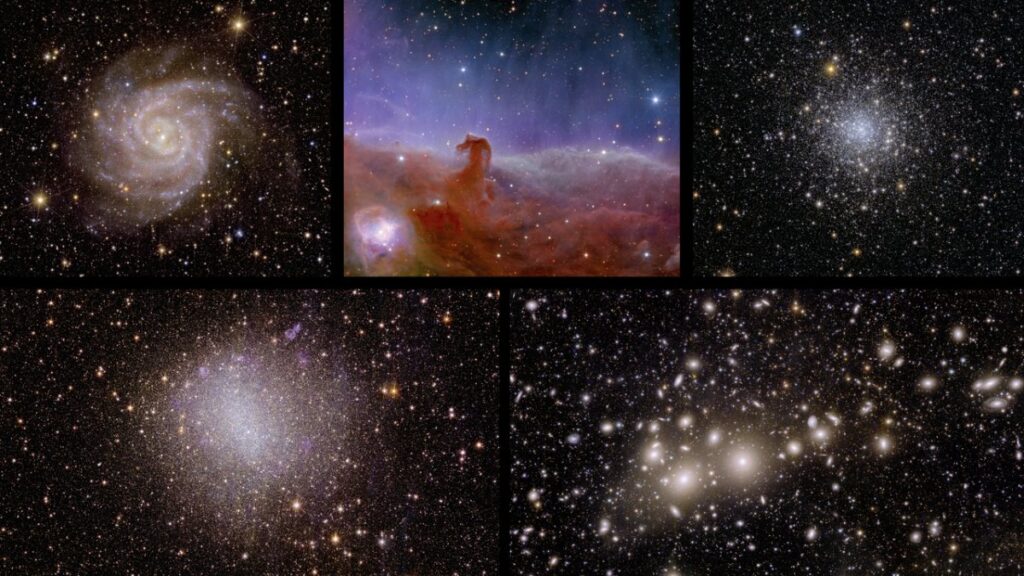
Galaxies in Dorado imaged by Euclid (file photo) — Photo: European Space Agency / Wikimedia Commons (CC BY-SA 3.0 igo)
The European Space Agency’s Euclid telescope is continuing its mission to draw the largest 3D map of the universe, covering billions of galaxies, to understand dark matter and dark energy, which together make up about 95% of the cosmos and whose nature remains unknown.
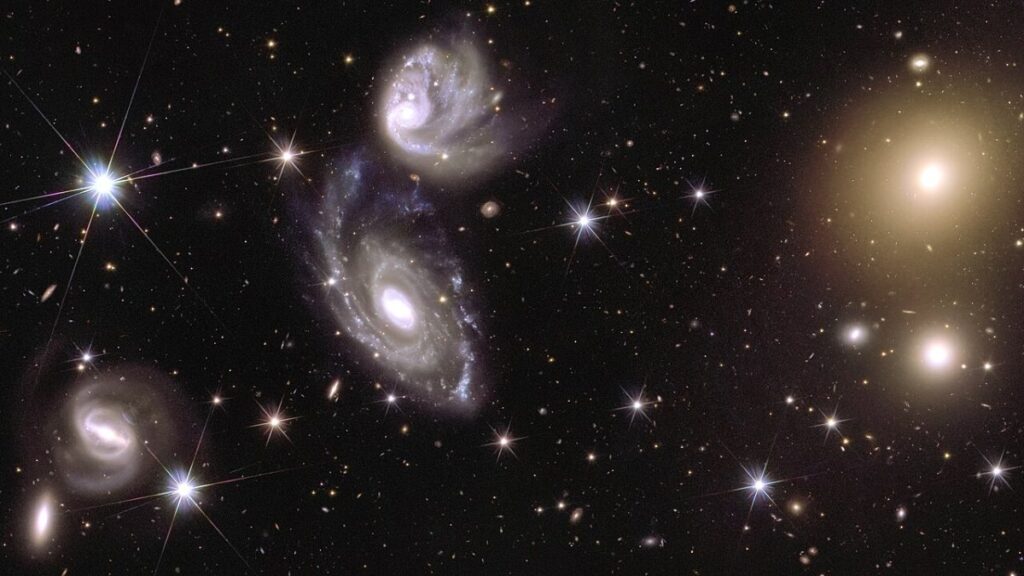
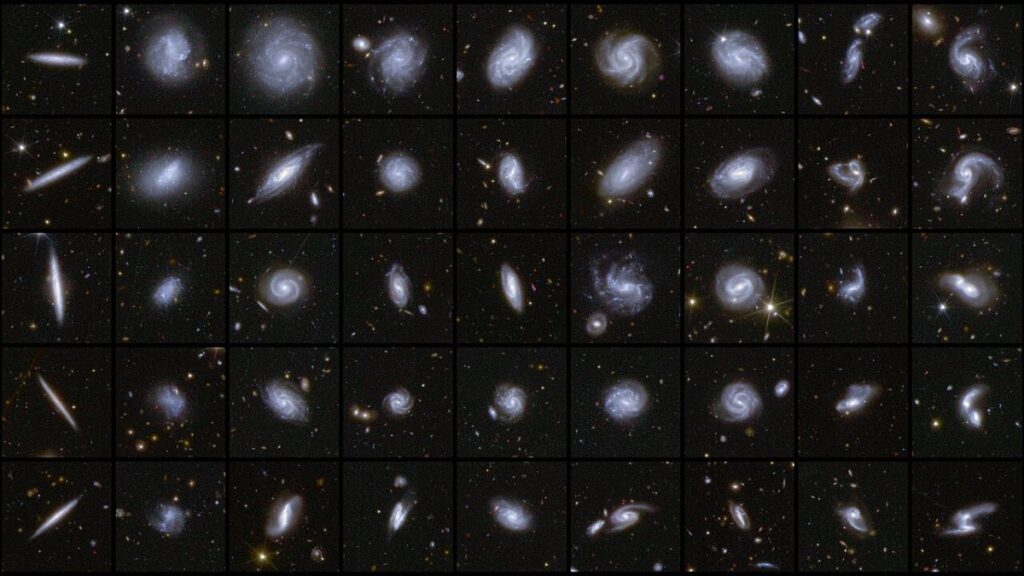
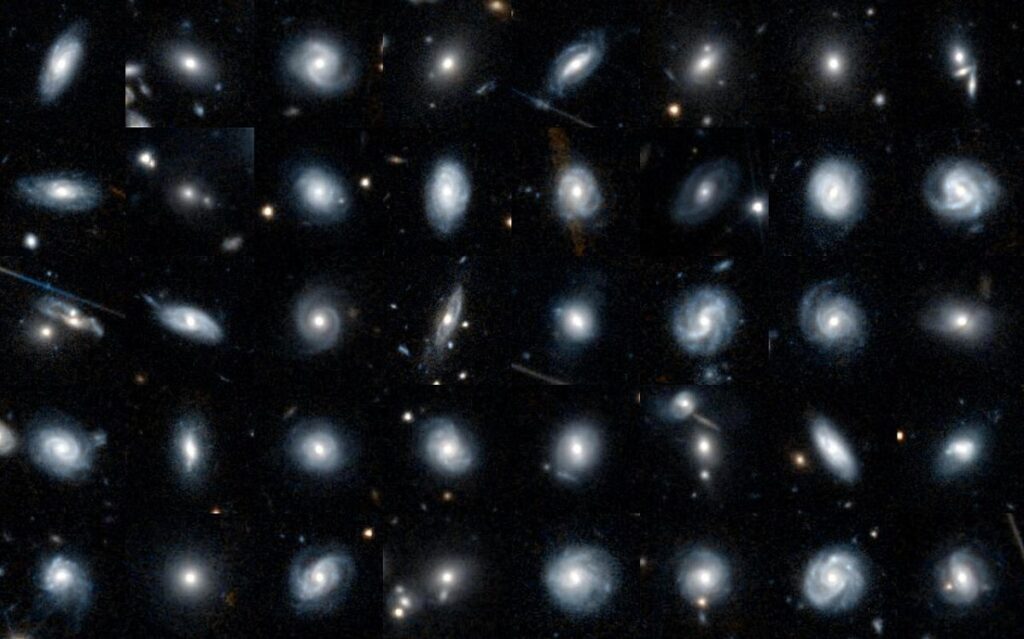
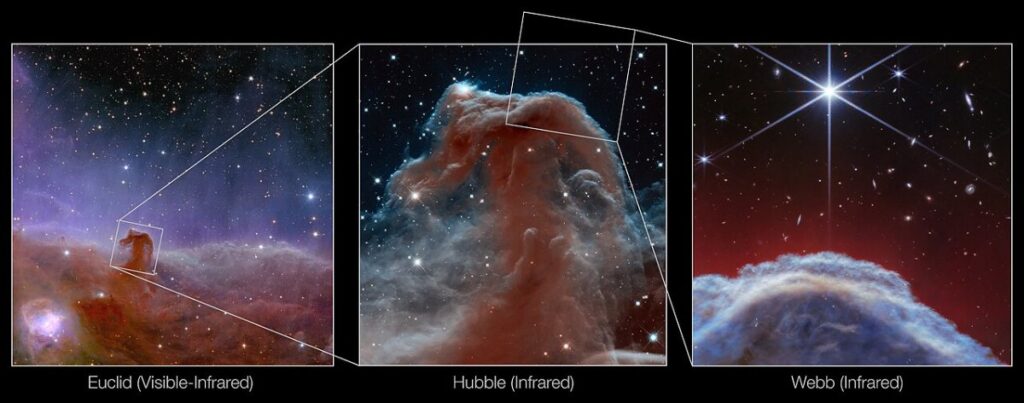
From its position about 1.5 million km from Earth, the telescope takes wide-field, high-resolution images revealing interacting and colliding galaxies, nebulae such as the Horsehead, and many galaxy shapes that volunteers around the world help classify through the Galaxy Zoo project.
Interacting galaxies spotted by Euclid — Photo: European Space Agency / Wikimedia Commons (CC BY-SA 3.0 igo)Galaxies of different shapes captured by Euclid — Photo: European Space Agency / Wikimedia Commons (CC BY-SA 3.0 igo)Galaxies for Galaxy Zoo volunteers to classify — Photo: European Space Agency / Wikimedia Commons (CC BY-SA 3.0 igo)The Horsehead Nebula seen by Euclid, Hubble and Webb — Photo: Wikimedia Commons / Wikimedia Commons (CC BY 4.0)One of Euclid’s first images — Photo: Wikimedia Commons / Wikimedia Commons (CC BY-SA 3.0 igo)
ESA makes the mission’s images available for public use, and scientists expect its data to help measure the expansion of the universe and how gravity bends light over billions of years.