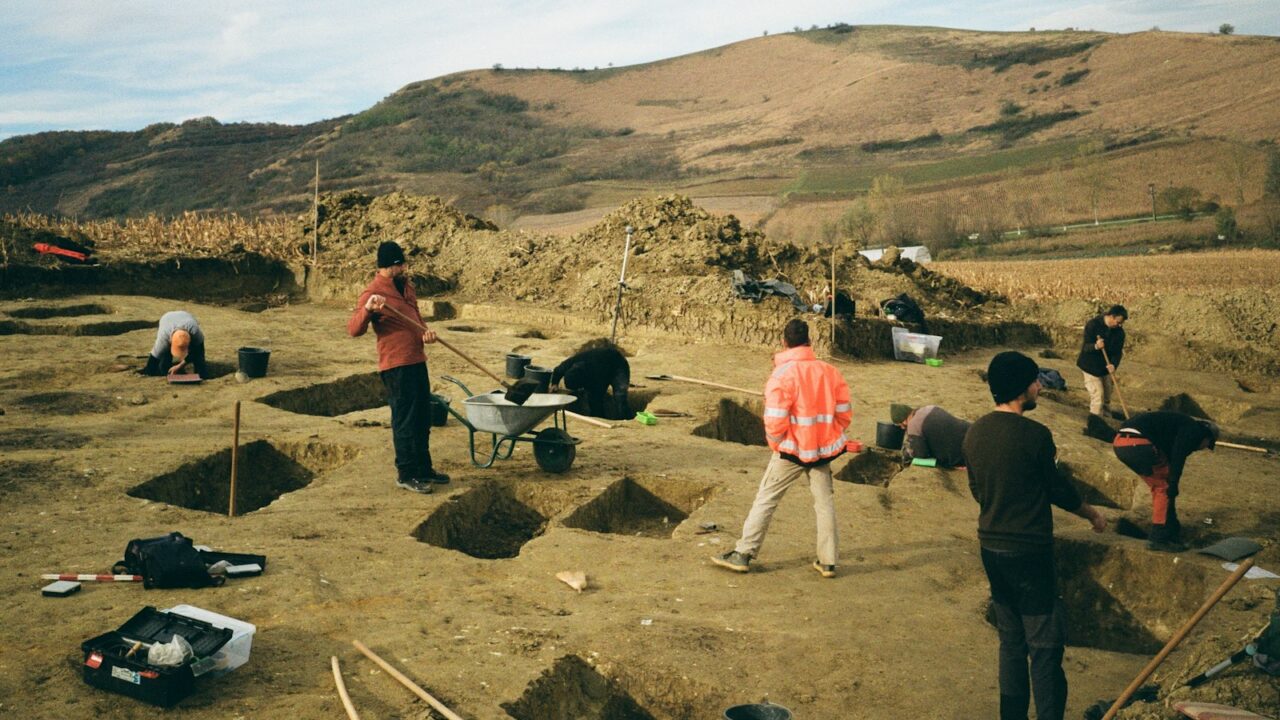
Archaeologists have found what looks like a ‘ghost body’ of a person buried about 1,400 years ago at the famous Sutton Hoo site in Suffolk, where the body and bones vanished because of the soil but the sand kept the shape of the human form, Youm7 reported, citing the Daily Mail.
The find came during recent excavations at the Garden Field cemetery near Woodbridge, a site known for discoveries linked to the history of the Anglo-Saxon kingdoms.
How the shape survived
Angus Wainwright, an archaeologist with the National Trust, said bodies and bones in some graves decayed in highly acidic soil, while chemical reactions from the decay hardened the surrounding sand, leaving a natural mould of the body. Burial goods were found beside it, including beads, tweezers, a knife and a decorative pin, and there is evidence a second person may have been buried in the same grave.
Comparison with Pompeii
The sand body prompted comparisons with the casts of Pompeii’s victims, destroyed by Vesuvius in AD 79, but the two differ: at Pompeii ash covered the bodies, which decayed and left voids that excavators filled with plaster.
A site still giving up secrets
The site is important for the ship burial found in 1939, believed to be that of an elite ruler, possibly King Raedwald of East Anglia. The Time Team programme is filming the new dig with the National Trust, and researchers hope analysis will reveal the person’s age, social standing and relationship to the possible second burial.