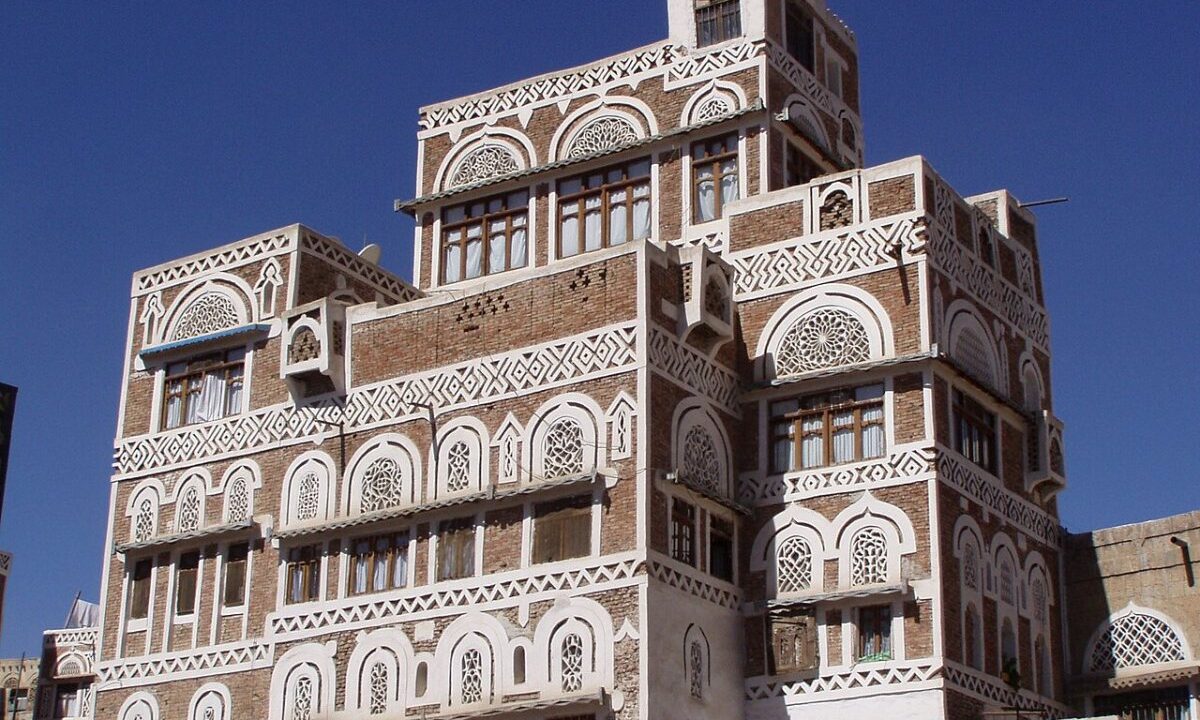
Yemen’s tall buildings were built from natural materials that are remarkably sustainable and perfectly suited to the hot, dry climate of the southern Arabian Peninsula, making them among the most distinctive traditional architecture in the world.
Entering through Bab al-Yemen, the vast gate to the walled Old City of Sanaa, feels like stepping into another world: tower houses crowd narrow lanes linking fruit and vegetable gardens to the old market, locksmiths repair huge metal keys for tall wooden doors, and a camel turns a millstone to crush sesame seeds.
At street level, the mud-brick walls show little more than large wooden doors, as windowless ground floors serve as animal shelters or workshops, while the narrow buildings – some with only one or two rooms per floor – rise high into the sky.
Higher up, ornate windows are filled with coloured glass or delicate lattice screens that protect the privacy of women inside, framed in white lime against the earthen walls, and rooftops are used for daily life. Sanaa’s Old City is a Unesco World Heritage site.
Source: BBC Arabic