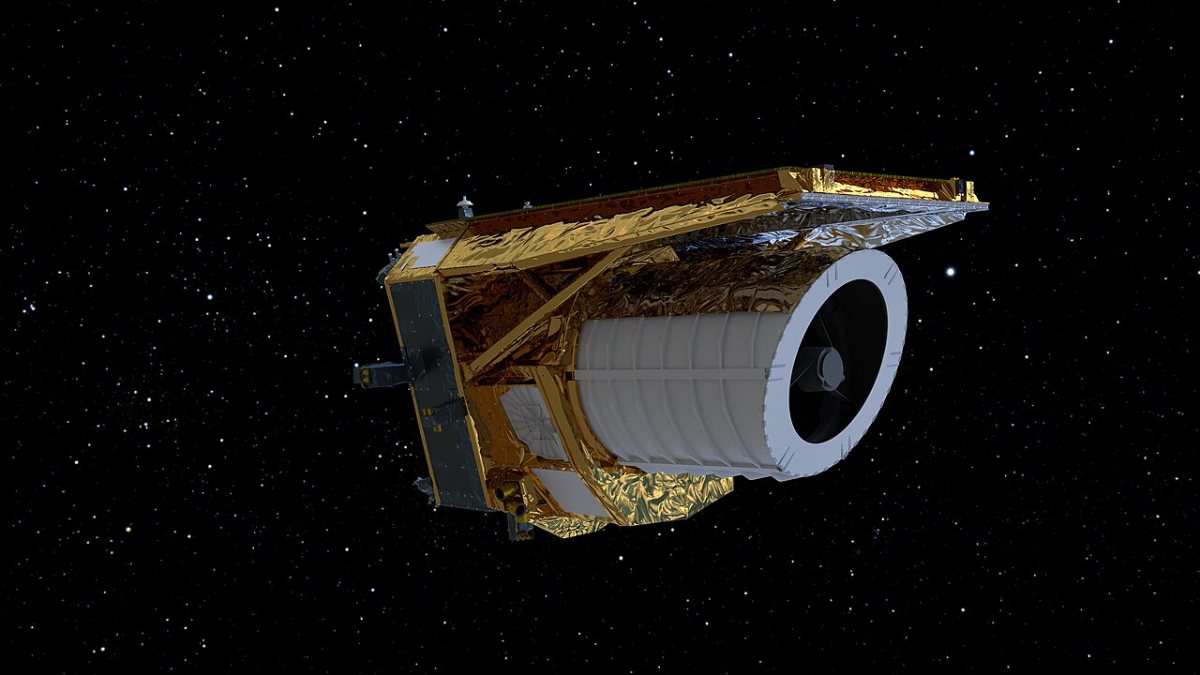
The European Space Agency has released a new batch of data from its Euclid mission, including more than 900 million galaxies and 15,000 possible cases of strong gravitational lensing, a step that could bring scientists closer to unravelling the mysteries of dark matter and dark energy.
The mission, launched in July 2023, aims to build the largest 3D map of the universe ever made, covering a third of the sky and more than 10 billion years of cosmic history. The new data include about 60 million candidate quasars, extremely bright objects at the centres of distant galaxies powered by supermassive black holes.
Arcs and rings of light
Gravitational lensing occurs when light from a distant galaxy passes close to a galaxy in front of it and is bent by its gravity, appearing as bright arcs or rings. The effect, enhanced by dark matter, helps scientists study how that matter is distributed in galaxies and test theories about its nature.
Andy Taylor, a professor at the University of Edinburgh, said the new number of candidate lenses was a major leap compared with what was previously known.
Source: ESA, The Guardian, Sky News Arabia