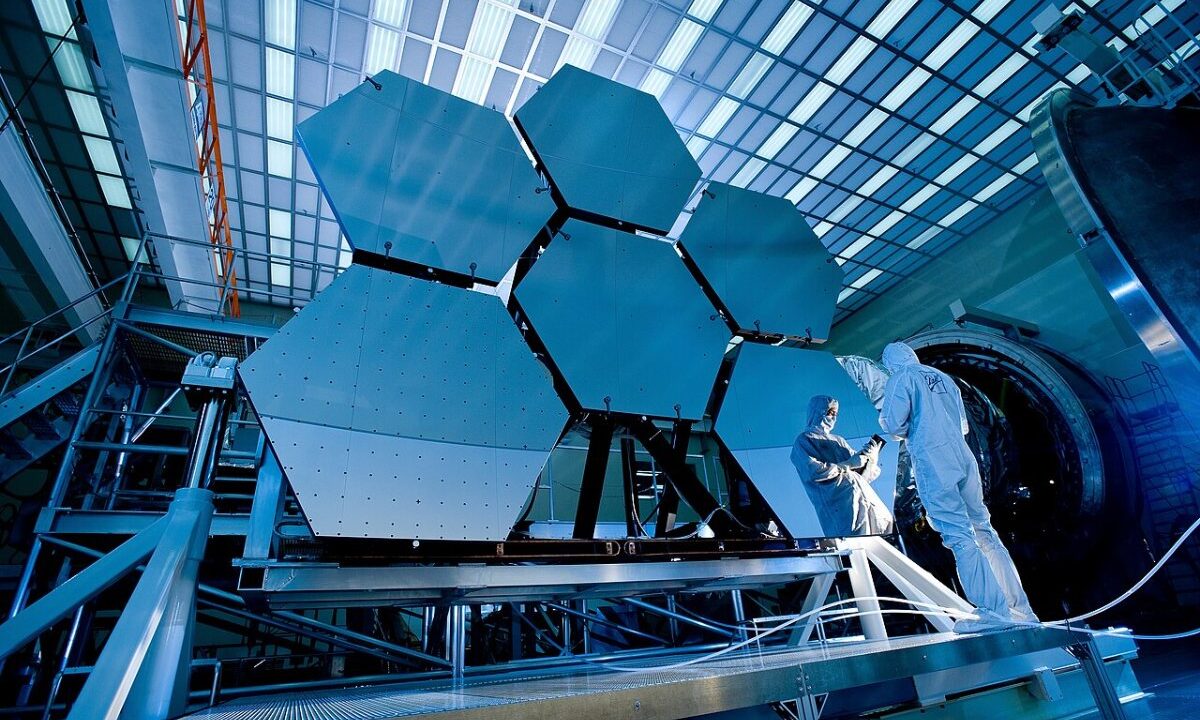
The James Webb Space Telescope has detected a rare type of light from the trihydrogen ion, H3+, a discovery never before recorded in space or the laboratory, giving scientists a new tool to study cosmic chemistry and the hot gas around forming stars.
The signal came from hot gas inside Herbig-Haro 168, in a star-forming region about 2,300 light years from Earth. The study, led by David Neufeld of Johns Hopkins University, has been accepted for publication in The Astrophysical Journal Letters.
A 40-year-old prediction
The ion consists of three hydrogen nuclei sharing two electrons in an equilateral triangle and has no permanent electric dipole, so it does not normally emit radiation as it rotates.
But astrophysicists Fu-Shih Pan and Takeshi Oka predicted in 1986 that it could emit faint light because of a slight distortion caused by centrifugal force as it spins, the so-called pure rotational spectrum, which the telescope has now observed for the first time.
Source: The Astrophysical Journal Letters, Sky News Arabia